1. Celts-The earliest inhabitants of the British Isles.
2. Jutes, Angles, Saxons-Conquered the Celts around 5th century B.C.; Gave their name to Southern Britan (England)
5. Alfred the Great-First great king of England.
8. Harald Godwin-Pope who opposed William the Conquerer.
9. William the Conquerer-Transformed England into one of Europe's strongest nation-states.
19. Joan of Arc-Peasant girl who claimed to hear heavanly voices to lead the French army into battle.
25. Hugh Capet-Began the Capetian line of French kings.
26. Louis VI-Capetian king who strengthened his power in Ile-De-France.
28. Louis IX-Improved French laws; France was the most powerful country at the end of his reign.
30. Boniface VIII-Quarreled with the king over wether the king could tax the clergy without his consent.
33. Ferdinand and Isabella-King and Queen of Spain in 1469. Sent Columbus to the new world.
39. Marco Polo-Son of an Italian merchant who occampanied his father on a trip to China in 1271. After he returned, he wrote a book called "The Kingdom and Marvels of the East"; His book spurred insterest in Europeans about Asia.
42. Christopher Columbus-Italian born adventurer who planned a voyage to the Indies in 1492 Columbus sailed the ocean blue!!!! Thought he could sail to the "Indies" by going West.
Who were the earliest known inhabitants of the British Isles? Celts
What were the dates of the Hundred Years’ War? 1337-1453
Which Germanic tribe conquered Spain in the 5th century? Visigoths
Which name did the Romans give to Spain? Hispania
These were Muslims from North Africa who invaded Spain: Moors
What does “reconquista” mean? A re-conquest to take back Spain from the Moors
Name 4 nations that developed in Europe during the Middle Ages. England, France, Spain, and Portugal
What is the name of the monument in Southern England that may have been an ancient Celtic worship site? Stonehenge
Which Germanic tribe named England? Anglo-Saxons
Which Anglo-Saxon poet lived in the 7th century? (Hint: There’s a Christian band named after him) Caedmon
Who was crowned king of France in 987 AD? Hugh Capet
Which French king was St. Louis, MO named after? Louis IX
What was the French Estates-General composed of? (List them out) Clergy, Nobles, and Commoners
Which peninsula is Spain located on? Iberian
Name 3 Germanic tribes. Angles, Jutes, Saxons
Which countries fought during the Hundred Years’ War? England and France Who won? France!
Monday, November 30, 2009
Chapter 13 Test!
Tuesday, November 10, 2009
Ch. 13 Section Review 1 plus Identify page 215
1. England, France, Spain, and Portugal.
2. The Celts. The Roman Empire.
3. The Angles, the Saxons, and the Jutes.
4. Augustine. In 664.
5. The Early English people had parts of the Bible in their own language.
6. Alfred the Great. He helped to make England a nation-state. He laid the foundations for the Navy. He promoted learning and translated the Gospels into English.
7. William the Conquerer. October 14, 1066.
8. He wanted to increase his own power. He transformed England into one of Europe's strongest nation-states.
9. Their language, French, mixed with Anglo-Saxons and results in English.
10. Henry I. He had superior wisdom in fairness. He didn't abuse his power as King. He established the exchequer.
Identify:
England-One of the four great nations of Europe.
Scops-Wandering poets.
Beowulf-Greatest Saxon poem.
Archbishop of Canterbury-The most influencial church office in England.
Danelaw-The North-eastern portion of Europe where Alfred confined the Danes.
London-An important town located on Thames River in south-east Europe.
Canute the Dane-Became King of England and ruled England, Denmark, and Norway as an empire.
Harold Godwin-The mots powerful noble in 1042 that was made King.
Norman Conquest-William the Conquerer's victory at the Battle of Hastings.
Census-Count of people and property.
Doomday Book-Book that made sure every penny of taxes could be collected.
Monday, November 9, 2009
World History Study Guide 11/9
1. feudalism-A way of life based on the ownership and use of the land.
2. fief-Land held by one man.
3. lord-Permitted a man(vassal) to use the land in return for services.
4. vassal-Man who uses the land.
5. knight-Heavily armed warriors; heart of the king's military force.
6. chivalry-Code of conduct for the nobility and the knights.
7. heraldry-Colorful and unuiqe emblems displayed. Code of arms.
8. castle-Heavilty fortified dwellings built by nobles.
9. joust-Two knights fought to knock each other off their horses.
10. tournament-Knights fought mock battles that lasted a whole day.
11. manor-Estates that belonged to the nobles.
12. serf-Farmers that worked on the manors.
13. Truce of God-Forbade fighting from Friday to Sunday of each week.
14. Peace of God-Denied sacraments to people who robbed churches, took a serf's property, or killed a non-combatant during battle.
15. burg-Community of traveling merchants.
16. middle class-Traveling merchants.
17. trade fair-Merchants from all over came together to sell their stuff.
18. guild-Developed during this time.
19. black death-Form of the Bubonic plague; devestated Europe.
20. Chaucer-Recognized as one of England's greatest poets. Wrote Canterbury Tales.
21. trivium-Grammar, rhetoric, and logic.
22. quadrivium-Arithmetic, music, geometry, and astronomy.
23. scholasticism-Theory in Greek philosophy.
24. Brethren of the Common Life-Christian group founded by Gerhard Groote in 13 A.D.
25. humanism-An intense interest in the subjects of the humanities.
26. patron-People who supported artists with their own money.
27. Sistine Chapel-One of Michaelangelo's most famous works.
28. Medicis-Powerful family.
29. Thomas Aquinas-spoke slow, but had a brilliant mind.
30. William of Ockham-Educated at Oxford. Said Bible was ultimate authority.
31. John Wycliffe-"Morning Star of the Reformation"; Thought the Pope's claim of absolute authority was wrong.
32. John Huss-Follower of Wycliffe. Pope had him burned at the stake. Followers=Hussites.
33. Gerhard Groote-Founded the Brethren of Common Life.
34. Dante-Wrote the Divine Comedy. One of the few pieces of medieval literature still read 2day.
35. Petrarch-"Father of Humanism"
36. Bocaccio-Wrote the Decameron
37. Michelangelo-Greatest artist of the Renaissance.
38. Flanders-The wool industry was started here.
39. Machiavelli-Friend of the Medicis.
40. Giotto-Famous artist of the Renaissance.
41. DaVinci-"Renaissance man"; Painter, sculptor, engineer, etc.
42. Prague-Oldest German university.
Monday, November 2, 2009
Complete Chapter 12 Section Review 1 plus Identify
1. They needed a law so the feudal system was developed.
2. Lords lent their land to the vassals in return for services.
3. Heavily fortified buildings surrounded by a moat and entered by a draw bridge.
4. Jousting pitted two opponents against each other in a match where they road on horses at each other with long sticks. Tournaments were mock battles that lasted all day.
5. Farmers that worked the land of the nobles. Their life was the total opposite of the nobility.
6. Truce of God and Peace of God.
IDENTIFY:
Feudalism-System of government in medieval Europe.
King-Ruled over all the land in the kingdom.
Crown Land-Land used for the king's personal use.
Knight-Heavily armed warriors.
Chivalry-Code of conduct for nobility and knights.
Heraldry-Colorful designs and emblems displayed as a code of arms.
Manor-Noble's house.
Demesne-The Lord's fields.
Friday, October 30, 2009
Chapter 9 Section review test and Chapter 10 Test
People:
1. Messiah-The Anointed one of God.
5. Domitian-Second great persecution erupted under him. Proclaimed himself Lord and God.
9. Marcus Aurelius-Fourth great persecution erupted under him. He was a stoic philosopher-Emperor. He hated Christians.
13. Irenaeus-Pupil of Polycarp and Bishop of Lyons in Gaul.
17. Origen-Theologian from Alexandria. Perhaps the most learned man in the Early Church History.
21. Diocletian, Maximian-Proclaimed themselves officially our Lord. Diocletian demanded worship as Father of the gods.
25. Aristides-A Christian apologist of the Early Church.
29. Athanasius-Eliquently and passionately argued for the true diety of Christ at the Council of Nicaea.
33. Theodosius I-Christianity became the only legal faith under him in the Roman Empire.
Terms:
1. Synagogues-Jews gathered here to worship.
2. Gentiles, Proselytes-Non-Jew converts.
3. Martyr-People who died for Christianity.
4. Book of Revelation-Prophetic visions seen by John known as the apocalypse.
5. Catacombs-Sub-Terranean galleries beneath the city of Rome where Christians hid.
6. Edict of Milan-Extensive protection to Christians.
7. Church Fathers-Preachers and teachers of the Early Church.
8. Apologist-Early Christian Leaders who attempted to defend Christianity.
9. Monarchianism-Denied the doctrine of the Church.
10. Latin Vulgate-The Bible of the Early Western church.
11. Creeds-Confessions of faith.
12. Apostle's Creed, Nicenan Creed, Athenasian Creed-Stated what Christianity believed, Rejected the teaching of Arianism, Named after Athanasius. These are Creeds of the church's confessions of faith.
13. Council of Nicaea, Arianism-Council that was called over the doctrine of Arianism which denied the diety of Christ.
Chapter Concepts:
4. Since people were forced to convert to Christianity, most people didn't really convert, and they just said they converted so they wouldn't be arrested. This polluted the church with the beliefs of other religions.
Chapter 10
People:
1. Justian I-His main ambition was to restore the Roman Empire to its former glory.
3. Theodora-Justinian's wife.
5. Leo III-Saved Constantinople during the second siege.
10. Ottoman Turks-Muslims that took over Constantinople.
Places:
1. Byzantium, Constantinople-Founded by Greek colonists, stood beside the Bosporus straight in the south-eastern corner of Europe.
3. Hagia Sophia-Most famous church of the Middle Ages.
Terms:
1. Christendom-Portion of the world which Christianity is the dominant religion.
3. "Greek fire"-Byzantine secret weapon during the invasions.
Thursday, October 29, 2009
Chapter 9 Section Review 2
1. Tertullian
2.Paul- beheaded and peter-crucified upside down
3.Domitian;they refused;John
4.subterranean galleries beneath the city of rome;were christians would worship
5.Trajan; polycarp
6.justin martyr,blandina
7.septimius severus; irenaeus, perpetua, felicitas
8.maximinus thrax and decius; origen
9. persecution of christains , the christain church triumphed through it all.
10. The edicts of milans , 313
identify: Martyr- the face of torture and death
Book of the revelation- prophetic visions
Polycarp- an aged bishop of smyrna
Maximinus thrax- emperor that started th e6th persecution
Decius- 7th persecution
Orgin- a christain philopsher and theologian
Maximian- proclaimed himsef off. our lord
Galerius- emperor who proclaimed toleration 4 the christains of the east
Constantine I.- extended legal protection and recgonition to christains
Monday, October 26, 2009
Restricted Nations
What does "restricted nations" refer to? Nations where Christianity is illegal.
Where are most restricted nations? The Middle East and Lower Asia area
Give me the names of 6 restricted nations and tell me why they are restricted.
Turkey- the nation religion is Islam
Belarus- You have to register with the state to be a Christian or to have a church
Nepal- militant Hindus persecute Christians
Mindanoa- Militant muslims kill and kidnap Christians
Laos- Comunist country
Saudi Arabia- Islamic Country
VOM is an organization that is devoted to helping Christians in countries where the Gospel is prohibited and reporting their testimonies.
The VOM offices are located in every continent, but most of their offices are located in Europe.
You can help by donating money to the VOM website so that they can support Christians all over the world.
Richard Wurmbrand founded the VOM.
Papers 'reveal' Chinese religious persecution: Documents reveal the churches persecution in China http://news.bbc.co.uk/2/hi/asia-pacific/1815231.stm
State Department Praises Jordan, Qatar for Progress on Religious Freedom: These nations are breaking tradition. Religious freedom in the Middle East is not common. These nations have accepted religious freedom.
The Damage Religious Crises have done to the North.
Due to attacks by Muslim mobs hundreds of Christians have been killed and thousands have lost their properties in North Nigeria.
http://www.persecution.org/suffering/newssummpopup.php?newscode=11058>
Church construction stopped, several arrested.
Indian police stopped construction of a church and arrested several Christians following pressure from anti-Christian extremists.
http://www.persecution.org/suffering/newssummpopup.php?newscode=11057>
Church growth in China too fast to keep up with.
Chinese church leader says,"There is one Pastor for every 40,000 Christians."
www.persecution.org
www.persecution.org
www.huffingtonpost.com
www.loc.gov
athiesm.about.com
www.telegraph.co.uk
People can search from all around the world and see what is going on with other Christians. They can donate money also to help them.
Wednesday, October 21, 2009
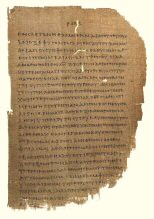
New Testament Papyrus
The existing leaves contain (in this order) the last eight chapters of Romans; all of Hebrews; virtually all of 1–2 Corinthians; all of Ephesians, Galatians, Philippians, Colossians; and two chapters of 1 Thessalonians. All of the leaves have lost some lines at the bottom through deterioration.
This is the book of Acts
This is a picture of the Dead Sea Scrolls
This is a picture of the book of Timothy
This is a picture of part of the Gospel of John on papyrus

Section Review 1 Chapter 9
1. The Roman world was connected by roads and ruled most of the world. This enabled them to travel quickly.
2. Herod the Great
3. Twelve disciples/apostles
5. Many heathens were won to Christ by the testimony of the Christians.
IDENTIFY:
synangogues- a place where the Jews would gather to worship
Gentiles- non-Jews
proselytes- Gentile converts
Messiah- Jesus Christ
church- local assemblies or bodies of believers
Friday, October 16, 2009
You wouldn't want to be a Roman Gladiator
a. Your Fate Awaits-If you're not killed in battle, then don't expect to be shown any mercy, you'll be taken prisoner and marched off to the city of Rome. If you survive the long journey you face an uncertain future. Will you be sold as a slave to a rich Roman citizen or will you be sent to work in the mines? Will you end up doing hard labour in the quarries or will you sail around the Roman Empire as a galley slave?
b. Gotcha!-The Roman soldiers wear armour and follow a carefully worked-out battle plan. The Gauls are not so well organised. The fighting is soon over and unfortunately for you your tribe lose the battle. You are one of the prisoners and you are about to begin a new life.
c. Sold!-After capture by the army you are passed on to a slave-dealer, who buys and sells slaves. The dealer takes you to a slave market where you stand on a platform for everyone to see. Slaves with diseases are made to hold a sign so that people know there is something wrong with them. The slave-dealer asks people to call out prices and he will sell you to the person who pays the most.
d. Oh No!-Your owner will hand you over to a trainer – a tough man who will teach you how to be a gladiator.
e. Who's who-In your training you will have learned how to fight as one particular type of gladiator. It has cost your owner a lot of money to buy you, feed, train and equip you for the contest. Now you must be victorious – winning is all that matters. If you lose, you die!
f. Fight-The games are about to begin. Your moment of glory is upon you – you hope. But first, you must entertain the crowd.
g. Ouch!-The crowd are on their feet, shouting "Habet, hoc habet!", which means "Got him! Let him have it!". There's only one thing you can do. As you raise your left hand to appeal to the emperor he will turn to the crowd and let them decide your fate. All you can hope for is that they call out "Mitte!"– "Let him go!".
h. It's over!-It seems the crowd showed you no mercy and the retarius was the winner of the contest. While your body is dragged from the arena, the victorious gladiator is presented with his prizes.

